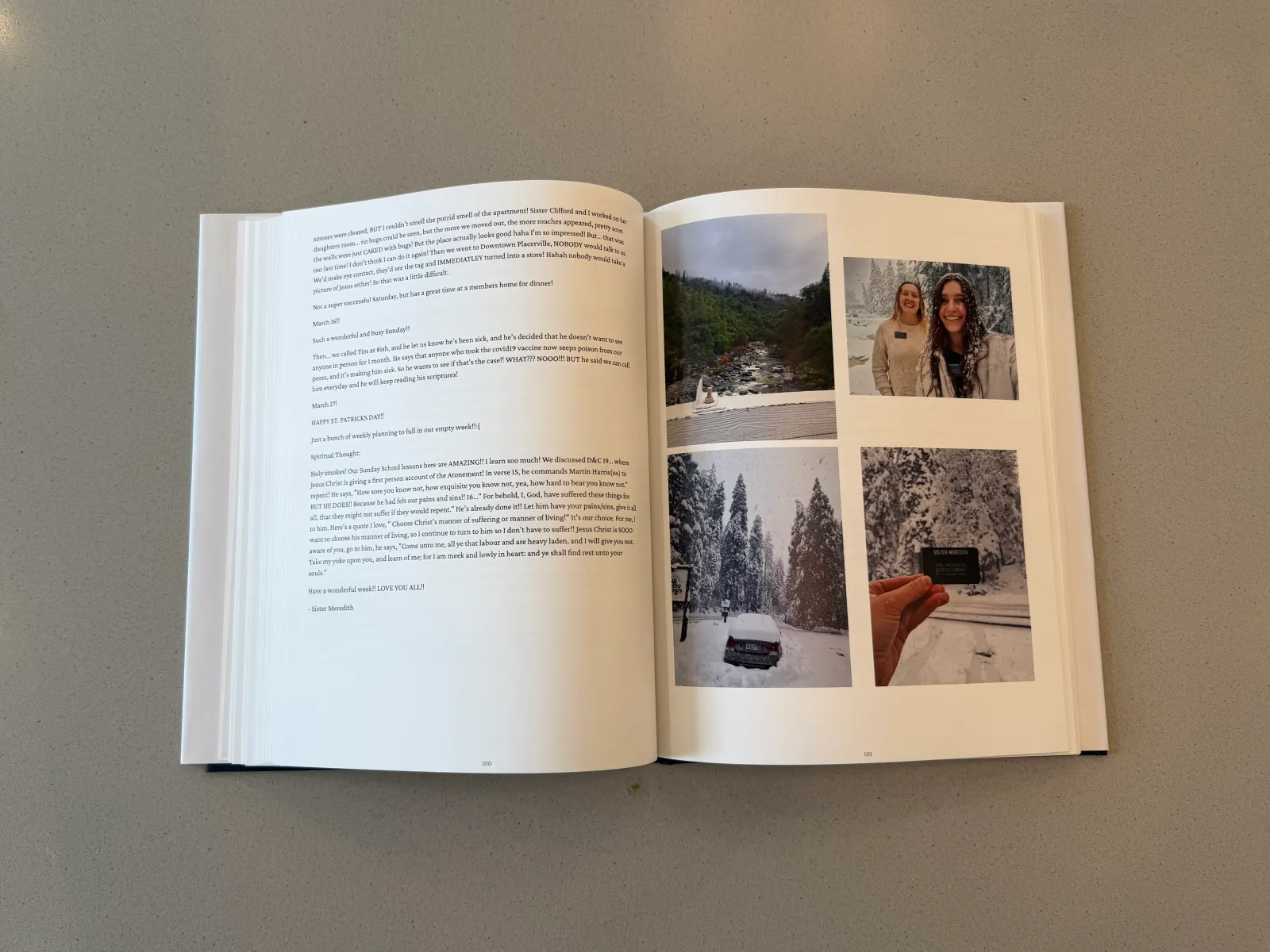
You have saved the mission emails. The photos are in an album, the letters are in a folder, and you can pull them up when you want to read them. So you may be wondering whether it is worth turning all of that into a printed book.
There are good reasons to keep the digital collection. You can search it, add a missing letter, and keep the original photos. A printed mission book gives you something else: a finished collection you can pick up, read together, and hand to someone in your family.
Here is what I would consider when deciding whether to print yours.
Make the Letters Easy to Pick Up
Think about where your mission emails live right now. Someone who wants to read them probably needs to know which account, folder, or link to open.
A book makes that part simple. Put it on the shelf, tell your family what it is, and they can open it. They do not need to borrow your phone or ask which password goes with the account.
It also makes room for the person who was not looking for a particular letter. They might open to a photo, start reading the page beside it, and find a story they had never heard. That is a nice way for a family conversation to begin.
Of course, a book tucked into a box may not get much attention either. Keep it somewhere people can actually find it!
Keep the Story With the Photo
A photo of a meal may not seem especially important on its own. Then you read the letter explaining that it was the first dinner two new companions tried to cook together.
Now you understand why someone took the picture.
The words give the photo its story. They explain the people, the place, and what was happening that week. When you put letters and photos together in a book, the next person does not have to guess how they fit.
You can organize a digital collection this way too. Printing gives you a finished version where the story and the pictures are already arranged for reading.
Give Someone Their Own Copy
A mission book can be a gift for the returned missionary, a parent, or a grandparent who would enjoy reading the letters again. Add a short introduction with the name, mission, and dates so someone reading it years later knows what they are holding.
It is easy to assume everyone already knows that information. Future family members will appreciate having it written down.
Keep Your Digital Files Too
I would still keep the digital collection and a separate backup. A book can be lost or damaged, and you may find more letters after it is printed.
Digital files are also useful when you want to search for a name, enlarge the text, send a copy to someone far away, or use an original photo for something else. For some family members, reading on a screen is simply easier. Remember though, it can still be hard to find digital copies too.
Decide When You Are Ready to Print
If you are still finding emails or sorting through photos, keep working on the collection first. If the cost does not fit right now, you can wait. Making a book does not have to happen the week your missionary gets home.
With Letters Home, you can organize the letters privately, prepare a PDF, and order a printed book when you are ready. Printing is a separate purchase; you can see the options on our pricing page.
If you would like to get started, our guide to turning missionary emails into a book walks through what to gather and what to check before ordering.